Stop Handing Out Squash at the Office: The Interactive Map That Actually Turns Your Garden Surplus Into Real Local Trades
Tired of hauling extra squash to work and watching it go to waste? If you’ve searched “trade garden abundance near me,” the free interactive map on OffTheLand.net turns your Central Florida garden surplus into real local trades. Stop the awkward handouts & start trading!
You grew it… and now it’s quietly going to waste.
If you’ve searched “trade garden abundance near me”, chances are something in your yard is overflowing right now. Thats a good thing!
Zucchini stacking up on the counter.
Herbs bolting faster than you can use them.
Tomatoes ripening all at once… then softening all at once.
And at some point… you become that person at work.
You know the one.
Walking into the office with a box of vegetables like:
“Hey… does anyone want some squash?” 😅
A few people take some to be polite.
One person is genuinely excited.
The rest quietly avoid eye contact the next week.
And somehow… you still have too much.
Most gardeners also try posting a photo in a Facebook group, but the messages usually go nowhere. Then the food still goes bad.
But friend, you don’t have to keep doing it that way.
🌱 Something has shifted in 2026
Across Central Florida, more people are growing food than ever.
Not just for fun.
For resilience.
With AI reshaping jobs and people rethinking how they spend their time and money, backyard gardens are quietly becoming mini food systems.
We’re seeing:
- Bigger gardens in smaller yards
- More interest in syntropic agroforestry and layered planting
- Home tea gardens with tulsi, lemongrass, and roselle
- Families experimenting with food forests instead of lawns
- A rise in local-first thinking over global supply chains
The result?
More abundance than any one household can use.
And a growing desire to connect that abundance locally instead of letting it go to waste.
🌿 The missing piece: actually finding people to trade with
In theory, trading garden surplus should be easy.
In practice… it’s scattered.
- Facebook groups are noisy and easy to miss messages
- Plant swap events are occasional, not ongoing
- Craigslist feels hit or miss
- Farmers markets are built for selling, not casual trading
What most gardeners want is simple:
“Who near me has something to trade right now?”
That’s where things are starting to change.
🪴 A simpler way to trade garden abundance near you
OffTheLand.net is built specifically for this exact moment.
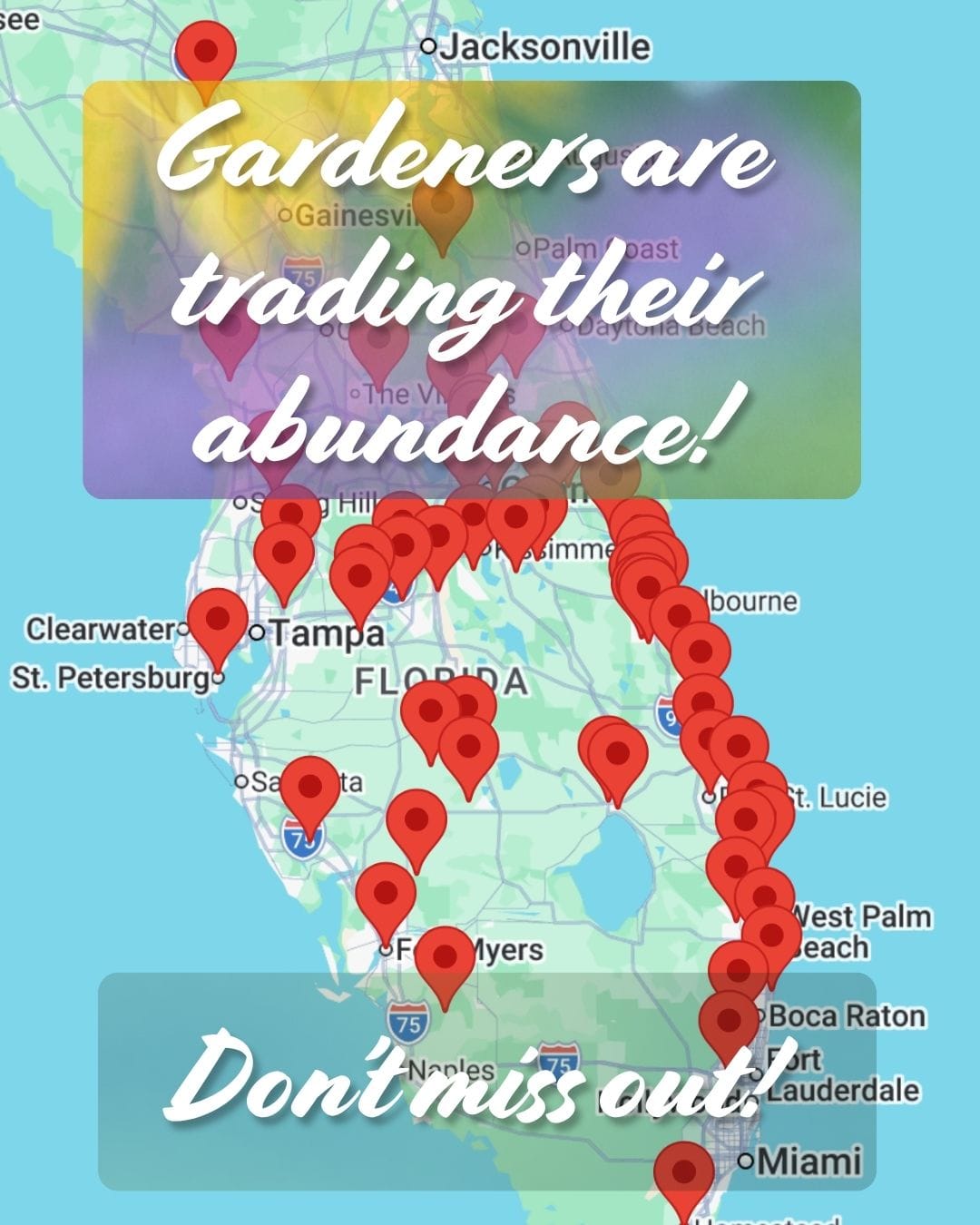
Instead of scrolling endlessly, you open a live map of your local area and see what people actually have available right now.
In Central Florida, that might look like:
- Seedlings and cuttings
- Extra produce
- Backyard eggs
- Raw honey
- Medicinal herbs
- Compost inputs like bokashi or worm castings
You can zoom into any city and instantly see what’s nearby.
No guessing. No waiting for replies that never come.
Just:
- Tap a listing
- Message the grower through built-in chat
- Set up a simple, safe meetup
Most people meet at:
- Local plant nurseries
- Health food stores
- Bank parking lots
- Community-friendly spots
There’s also a review system, so you’re not dealing with complete unknowns.
And for growers?
It’s completely free to list what you have.
☀️ What actually grows and trades well in Central Florida
If you’re in Zones 9b to 10a, you already know this climate is… intense.
Heat. Humidity. Sudden storms. The occasional hurricane reminder.
But it also creates serious abundance if you work with it.
Here’s what’s moving well in local trades right now:
High-demand surplus items
- Okra, especially red varieties
- Sweet potato slips and tubers
- Tropical herbs like lemongrass, moringa, and Cuban oregano
- Passionfruit vines and cuttings
- Seminole pumpkin seeds
- Heat-tolerant tomatoes like Everglades or solar fire
What people actually prefer
Locally acclimated plants.
Not big box store varieties that struggle in summer.
Plants that have already:
- Survived Florida humidity
- Adapted to sandy soil
- Handled real storms
In practice, a cutting from your neighbor’s yard often outperforms something shipped in from another state.
🌳 Who this is really for
When people search “trade garden abundance near me”, they usually fall into one of three groups.
-
You have too much
You’re harvesting more than you can eat.
You don’t want to waste it.
You don’t necessarily want to “start a business.”
You just want it to go to someone who will use it. -
You want to grow more without spending more
You’re looking for:- Free or low-cost plants
- Cuttings that actually thrive locally
- Seeds adapted to your microclimate
Trading beats buying every time here.
-
You want real local connection
Not just comments.
Actual people.
People you can meet, trade with, maybe even grow alongside over time.
Most plant swap groups try to do this.
But they’re limited by format.
Posts get buried. Messages get lost.
A map changes that.
🐝 A few smart guidelines before you trade
Trading is simple, but a little awareness goes a long way.
Quick safety checklist
- Meet in public, well-lit places
- Bring only what you agreed to trade
- Trust your instincts
- Start small with new people
Florida cottage law basics
If you’re trading homemade goods:
- Non-perishable items are generally safer
- Label clearly if sharing food products
- Be transparent about how things were grown or made
Why this matters long-term
Trading isn’t just about saving money.
It builds:
- Local food resilience
- Stronger soil practices
- More nutrient-dense food systems
- Real community trust
In real-world systems, that’s what holds everything together.
🌾 How to start trading your garden abundance (step-by-step)
Getting started takes about 10 minutes.
-
Create your free digital farmstand
Go to https://OffTheLand.net and set up your profile.
It's like a street farmstand, but digital! It's your storefront! -
List what you actually have
Keep it real and current:- “Extra okra this week”
- “Lemongrass divisions”
- “Cherry tomatoes, no spray”
The more list, the higher visibility!
-
Add a little transparency
People appreciate knowing:- How you grow
- Whether you use sprays
- Soil practices
-
Respond through chat
When someone nearby reaches out, you can message directly.
No middleman. No confusion. -
Meet and trade
Pick a simple public location and keep it easy. -
Leave a review (In progress)
This helps build trust across the whole local network.
🌿 FAQ: trading garden abundance in Central Florida
Is it really free to use?
Yes. Listing your garden surplus or plants is completely free.
Can beginners join?
Absolutely. Many people start by trading just one or two plants or small harvests.
What about food safety?
Be transparent. Share how your food is grown. Most local trades rely on trust and clear communication.
How is this different from farmers markets?
Farmers markets are scheduled and vendor-focused.
This is ongoing, local, and peer-to-peer.
Do I need a big garden?
Not at all. Even a few extra herbs or cuttings are valuable to someone nearby.
🌱 A small shift that changes everything
Most gardeners think abundance is a personal win.
Something you manage inside your own fence.
But in practice, abundance becomes more powerful when it moves.
When your extra becomes someone else’s starting point.
When your cuttings become someone else’s garden.
When your harvest feeds more than just your household.
If you’ve been searching “trade garden abundance near me,” you’re already thinking in that direction.
Now you have a way to act on it.
You can create your free farmstand and see what’s growing around you at:
👉 https://OffTheLand.net
Because the goal isn’t just growing more food.
It’s turning backyard abundance into something stronger.
A local network.
A shared system.
A community that actually feeds itself.